About

Forty years of building
in Kathmandu.

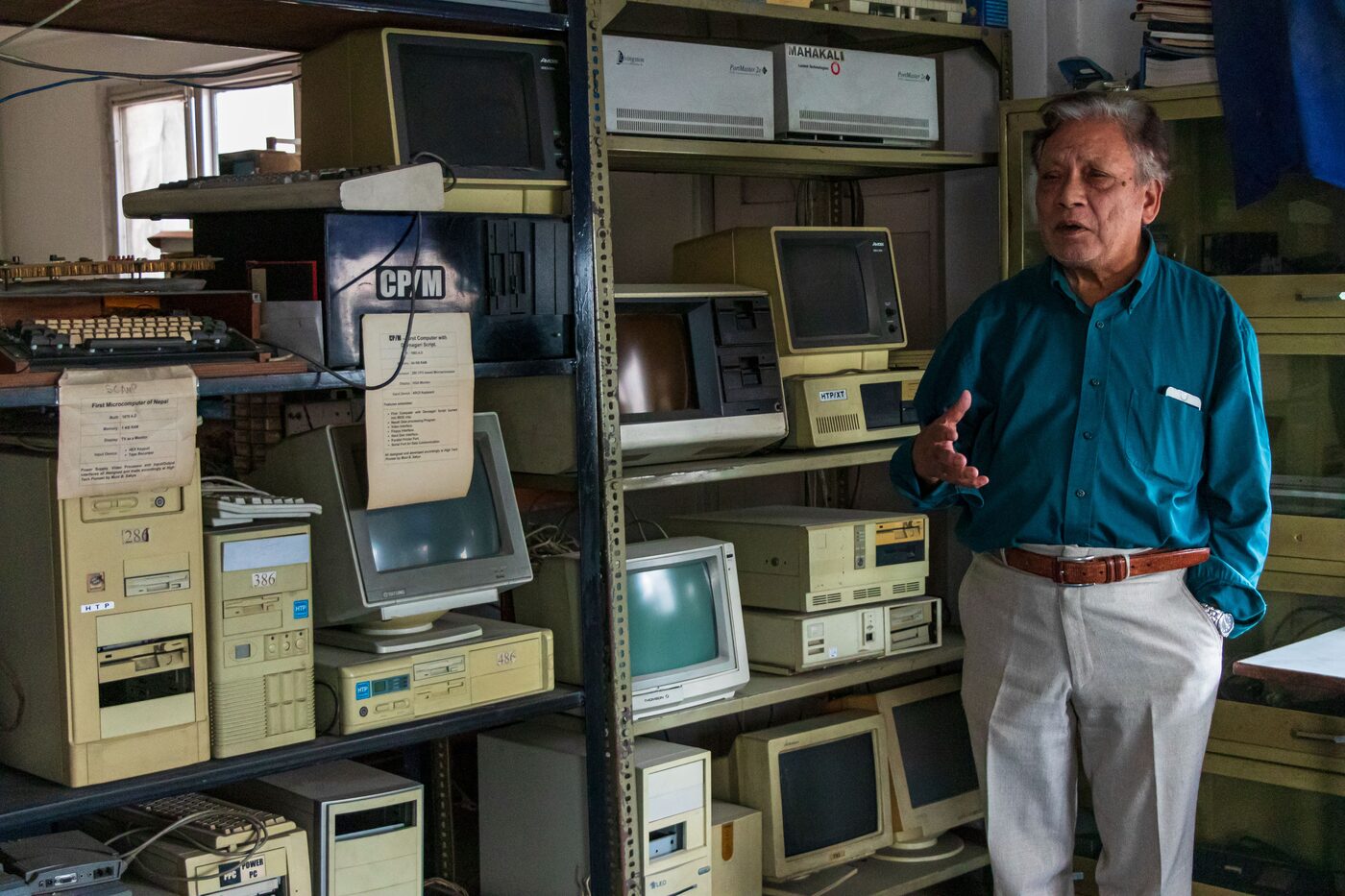
Muni Bahadur Sakya standing beside Nepal's first supercomputer
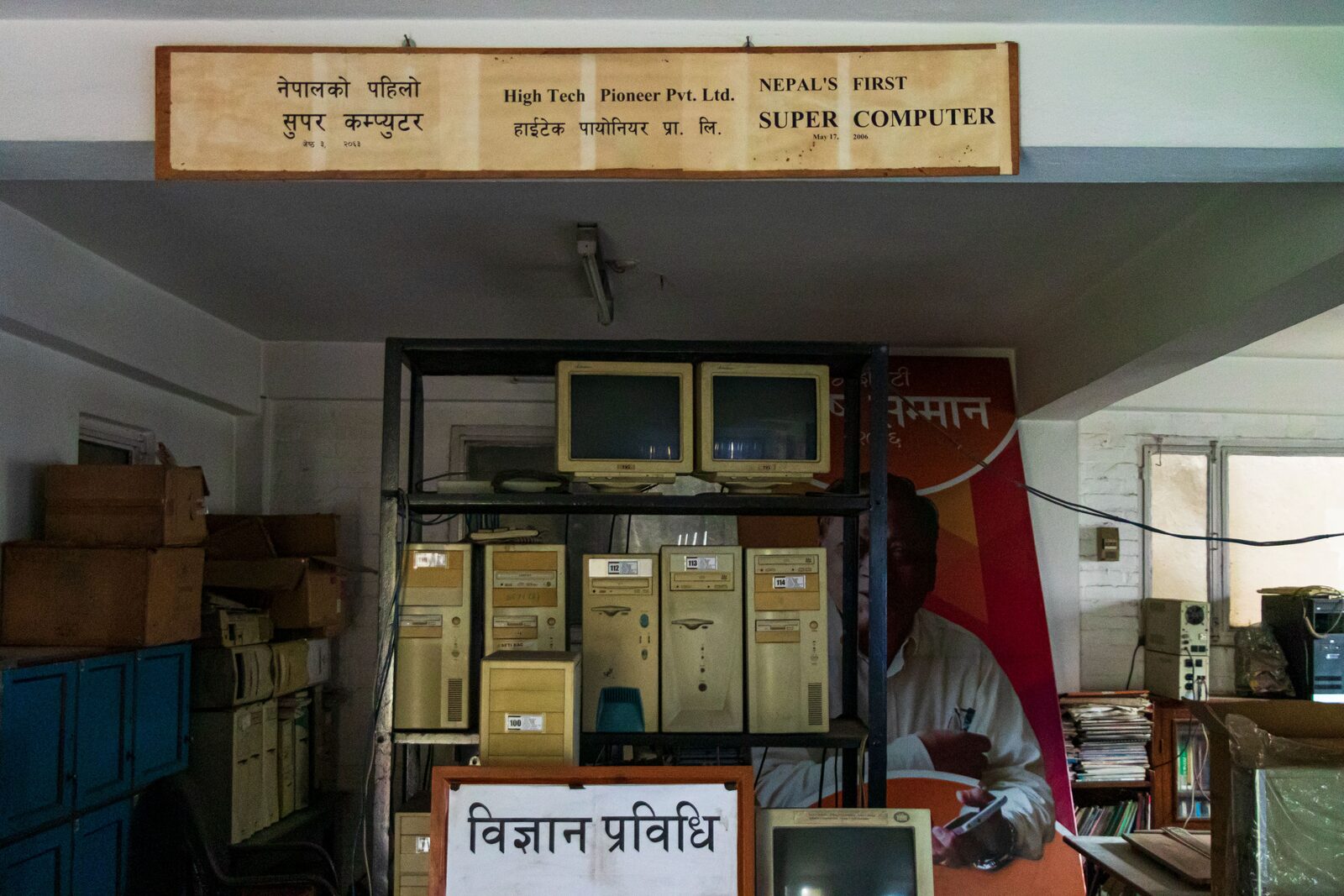
Muni Bahadur Sakya with the sixteen-node cluster he built — 2006.

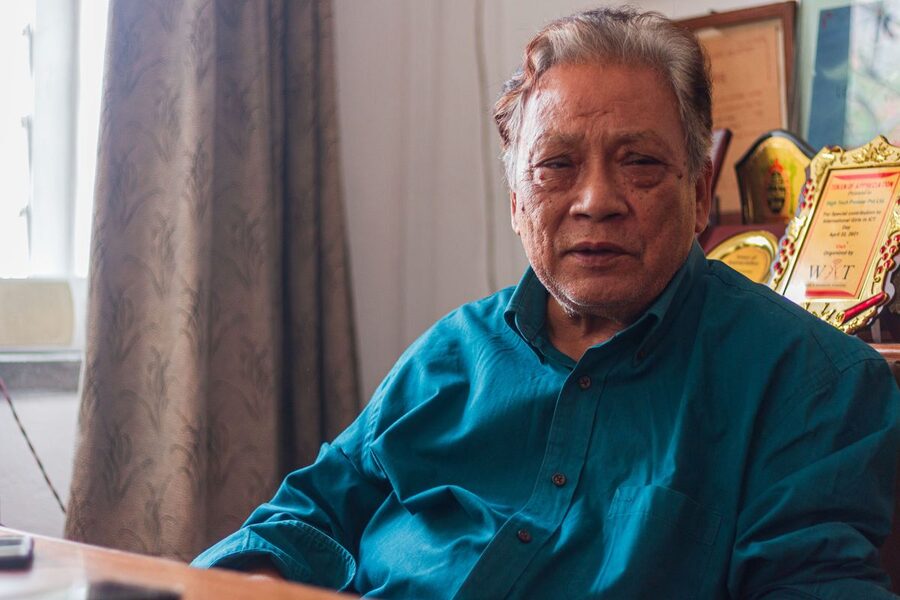
The founder

Muni Bahadur Sakya

Born in Patan in 1942. Radio engineering in Calcutta (1962), computer engineering in England (1970), mainframes in France — then home, to build.

He assembled Nepal's first microcomputer in 1979 from parts gathered across three continents. In December 1983 his CP/M machine displayed the national anthem in Devanagari script — the first computer to read Nepali — earning a national Science Award. He founded High Tech Pioneer in 1984, opened Nepal's first computer-card factory in 1995, built a Nepali-speaking robot in 2005 and demonstrated the country's first supercomputer in May 2006.

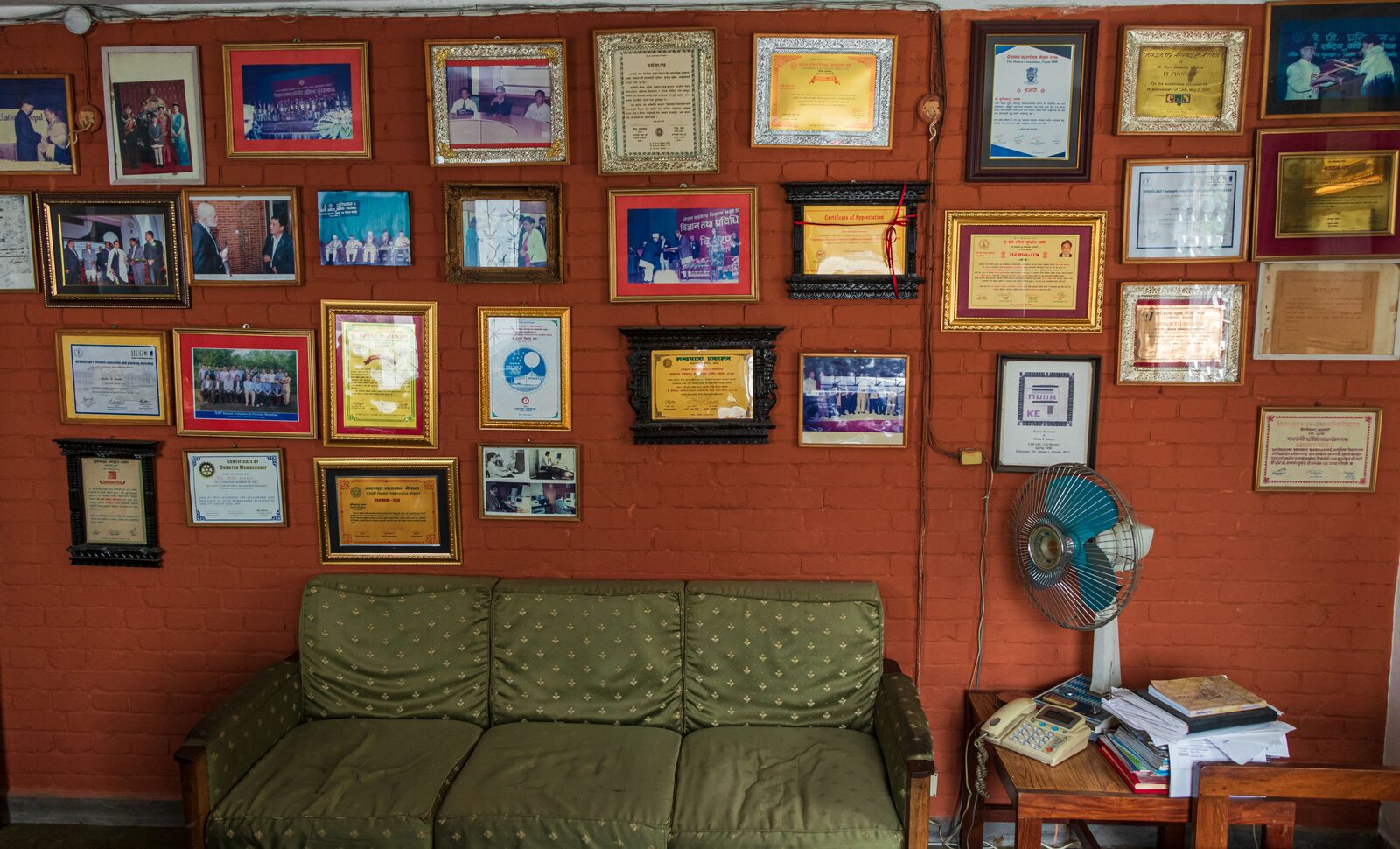
Honoured by RONAST (2005), the CAN Federation ICT Business Excellence Award (2012) and the ICT Pioneer Award (2016). His work is documented by Wikipedia, The Record and CAN Federation.

Timeline

Firsts, year by year.

  1. 1962

    Radio engineering, Calcutta

    Muni Bahadur Sakya completes a diploma in radio engineering in Calcutta, India, and joins Radio Nepal as a technician on his return — repairing and running the country's broadcasting hardware.

  2. 1970

    Computer engineering, United Kingdom

    Awarded a British Council scholarship, Sakya studies electronics and computer engineering in England. He is offered engineering work there — and turns it down to return home.

  3. 1973–79

    Mainframes and microprocessors, France

    On French government training he works with mainframe computers, building microprocessor-based controllers and video cards — the exact skills that will soon be carried back to Kathmandu.

  4. 1979

    Nepal's first microcomputer

    From parts gathered across three countries — a US keyboard, a Russian television for a monitor, a hand-built power supply and video card — Sakya assembles Nepal's first microcomputer. It is demonstrated at the South Asian Regional Conference on Computers in Kathmandu; The Rising Nepal and Xinhua cover the build. Parts sourced from around the world earn it a nickname: the "UN computer".

  5. 1981

    Floppy-disk controllers, Minnesota

    Sakya works at MTS Systems Corporation in the USA on floppy disk controller development — pushing toward 900 KB disks when 80 KB was standard — and visits Silicon Valley to see IBM's first hard-drive PC in production.

  6. Dec 1983

    The computer learns Nepali

    Returning home with sixteen boxes of components, Sakya demonstrates the first computer able to read and display Devanagari script on a CP/M machine — the national anthem, श्रीमान् गम्भीर, rendered in Nepali. A seven-day exhibition at Tri-Chandra College follows, Gorkhapatra prints the story, and he receives a national Science Award for the achievement.

  7. 1984

    High Tech Pioneer Pvt. Ltd. founded

    Sakya establishes High Tech Pioneer Pvt. Ltd. in Dillibazar, Kathmandu — Nepal's first commercial computer hardware company, registered while the country was still the Kingdom of Nepal under the Panchayat system.

  8. 1985

    Agriculture Development Bank goes Devanagari

    The Agriculture Development Bank commissions nineteen computers — one per branch — running Sakya's Devanagari system, entering customer names in Nepali. Government offices follow.

  9. 1995

    Sun Moon Computer Industry

    Sakya opens Sun Moon Computer Industry, the first Nepalese company to manufacture computer cards commercially — an early bid at hardware sovereignty against full import dependency.

  10. 2004–05

    The Munis Robot speaks Nepali

    A home-grown robot that speaks Nepali and senses obstacles through ultrasonic, infrared and mechanical whisker sensors — years before robotics was a topic in the domestic press.

  11. 2005

    RONAST science award

    The Royal Nepal Academy of Science and Technology felicitates Sakya as an A-class scientist in information technology for sustained contribution to Nepali science.

  12. 17 May 2006

    Nepal's first supercomputer

    A sixteen-node cluster running open-source software (OpenMosix and OSCAR) is publicly demonstrated in Kathmandu — the country's first supercomputer, built from commodity machines for weather, financial and research computing.

  13. 2012

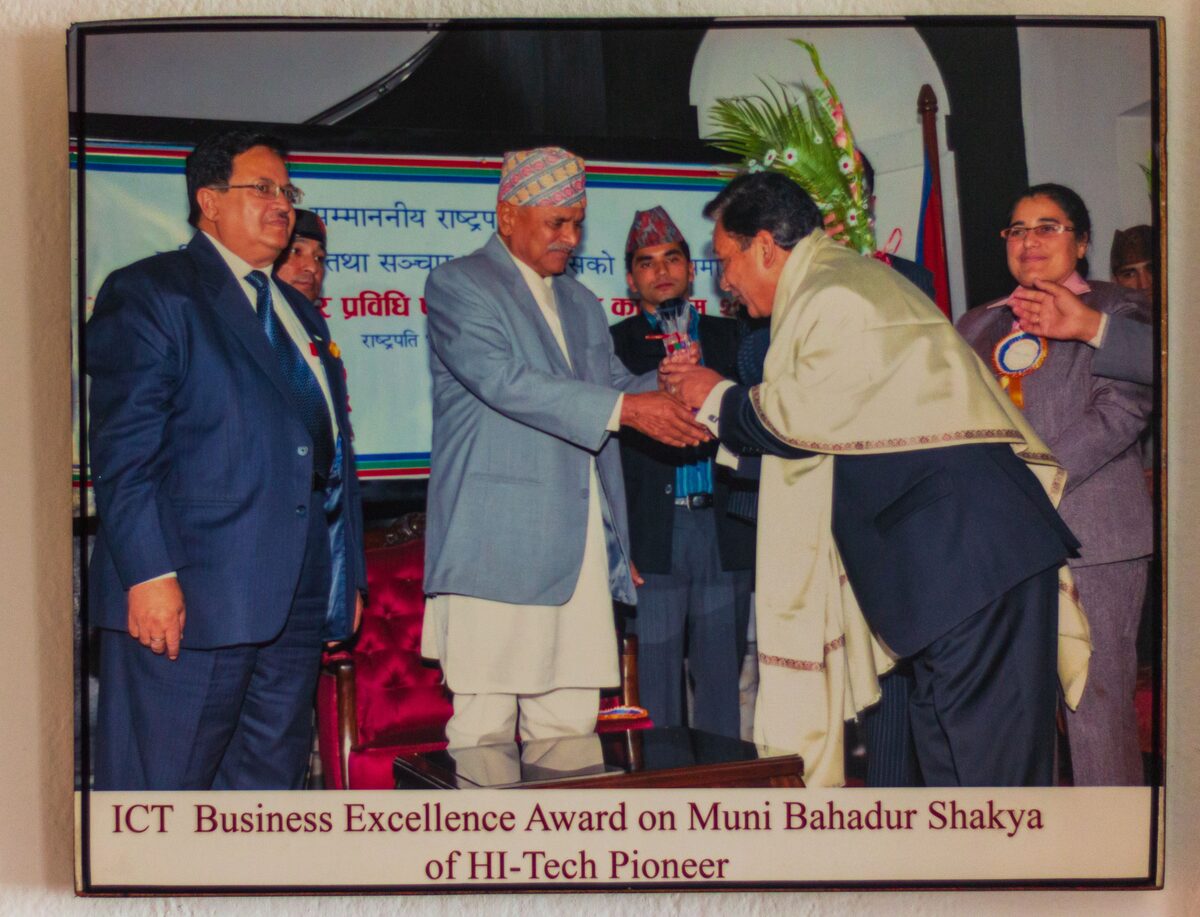
    ICT Business Excellence Award

    The Computer Association of Nepal (CAN) Federation honours Muni Bahadur Sakya with its ICT Business Excellence Award for ushering information technology into Nepal.

  14. 2016

    ICT Pioneer Award

    Lifetime-contribution honour: the ICT Award committee recognises Sakya as the pioneer who "set a new precedent by demonstrating to everyone that it was possible for computers to be built in Nepal".

  15. 2020s

    Humanoid robotics and applied AI

    The lab enters its fifth decade building an InMoov humanoid robot and an AI wheeled robot on embedded edge-AI hardware — speech recognition, vision and language models engineered around Nepali users — carrying four decades of Devanagari computing into the age of machine learning.

People

Who's here now.

Muni Bahadur Sakya, Founder & CEO

Muni Bahadur Sakya

Founder & CEO

Born 1942 in Patan. Built Nepal's first microcomputer (1979), taught computers to read Nepali (1983), founded the country's first commercial computer hardware company (1984) and its first computer-card manufacturer (1995), and demonstrated Nepal's first supercomputer (2006). Honoured by RONAST (2005), the CAN Federation (2012) and the ICT Pioneer Award (2016). Still at the bench, five decades on.
Ram Kumar Tamang, Software Lead — Robotics

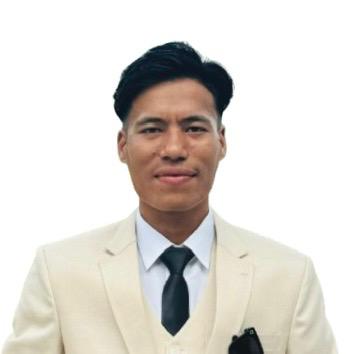
Ram Kumar Tamang

Software Lead — Robotics

Backend engineer specialising in Python, Django and FastAPI. Leads software for the HTP humanoid robot — Whisper speech recognition, vision-language scene understanding, face recognition and the master control pipeline on embedded hardware. By day he builds Nepal's national weather forecast and flood early-warning platforms at NAXA Pvt. Ltd.

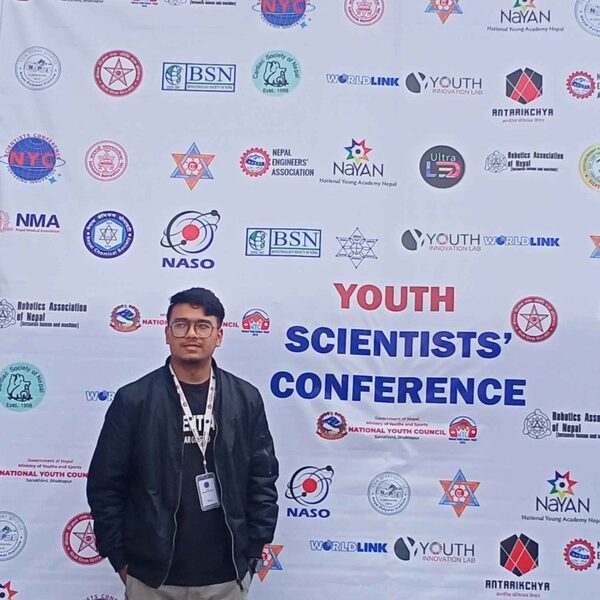
Subash Sigdel, Robotics & AI Researcher

Subash Sigdel

Robotics & AI Researcher

Researcher in reinforcement learning and computer vision at NAAMII's A² Lab. Co-author of "Segment Anything but Farms" (WACV 2026 Workshop on Geospatial Computer Vision). At HTP he works on grounding vision-language models in physical robot action — teaching the machine to point at what it sees — alongside the 3D-printing pipeline and mechanical assembly.

Bikash Tamang, Lab Assistant

Bikash Tamang

Lab Assistant

Keeps the lab running day to day: 3D-print part finishing, servo wiring and calibration, sensor mounting and test support across the humanoid and wheeled robot builds.

Visit the lab.

Dillibazar, Kathmandu. Students, engineers and researchers welcome.

Get in touch